


‘My only crime was my identity’: A Rohingya teacher on seven months in Arakan Army detention
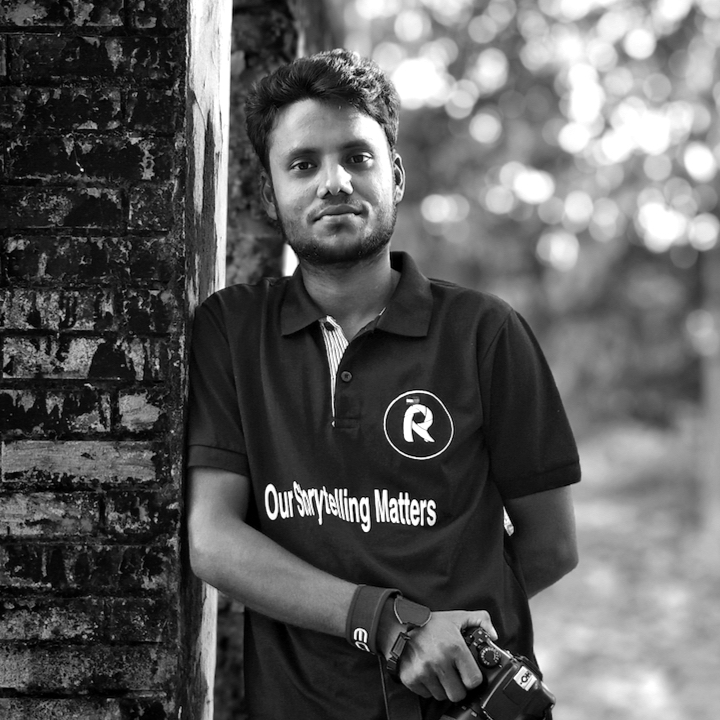
Story and photography by Ayub Khan Dkl

For seven months, Noor Alam disappeared into a dark detention centre controlled of 'Arakan Army'. It is not because he committed a crime, not because he carried a weapon, but because he was a Rohingya Muslim. A common village teacher and father who was dragged from his home, handcuffed in front of his daughters, and thrust into a world of torture, humiliation, and fear. His only “crime” was his identity. This is the story of how a respected community member became a prisoner in his own homeland and how he survived to tell the truth.
Noor Alam, 56, is a Rohingya detainee of AA. He is a resident of Peramfuru (Mingalar Gyi) village, Maungdaw Township, Arakan State, Myanmar. Before his arrest, Noor Alam lived a stable and dignified life with his family. He taught at a Hafezkhana (Holy Qur’an memorization school) in the large madrasa of his village and also cultivated paddy fields, which supported his family.
On 29 May 2024, at around 5pm, AA rebels entered Peramfuru village, opening random gunfire without any apparent military target and taking positions across different parts of the village. In the evening at around 8pm, two AA members broke the door of Noor Alom's house and forcibly entered in his house.
“They put handcuffs on my hands immediately and made me sit on the ground. They beat my daughters and looted jewelry, money, and documents from my house,” Noor Alam said.
He was taken onto the village road, where AA rebels had already arrested four other Rohingya from nearby villages, accusing them of supporting Rohingya armed groups. A resident of Peramfuru village stated that none of those detainees had any links to armed groups, but they were arrested only because they were adult Rohingya individuals. They arrested adult people for no reason and physically tortured them.
At around 8:30 pm, the detainees were transported to Naymay-6 in Kyauk Hlay Khar village, where they were held overnight without food or water. The next morning, around 5am, they were moved to Nakaka-10 (Infantry Battalion-10) in Zin Paing Nyar village. There, AA rebels collected all the personal data from the detainees and took video footage.
“They called me first, collected my bio-data, and beat me inhumanly, saying that I looked like a member of an armed group,” Noor Alam said.

He reports that every morning and evening he was brutally beaten and tortured for 14 consecutive days.
“Those Mogh rebels do not have souls in their hearts,” he cried. “Otherwise, they would not torture a human being like that. A human cannot beat another human without seeing any wrongdoing. It was only because I am a Muslim. In their eyes, my religion and identity seemed like a crime.”
After then, while blindfolded, the detainees were transported to Nakaka-7, Boli Bazar, where the AA rebels had captured a former military base months earlier. Noor Alam was taken into a dark room, where they tortured him continuously.
“In that dark room, they fired guns to frighten me. They kicked and punched me while shouting ‘Kalar’ and were drunk,” Noor Alam said.
During this detention time, they were given only a small amount of food and water once in a day. They did not receive any medical care, while their beating wounds became infected with bugs and discharged mucus.
“We were being treated like animals. I asked, what was my fault? Why am I being arrested? Can you tell me the crime against me in the village? Their response was a mocking laugh,” Noor Alam said.
The detainees were forced to work as porters and were assigned night duties at high-risk posts during junta strikes, which Noor Alam describes as the most dangerous and fearful moments, as they were under armed guard.

On 21 June 2024, early in the morning around 6 or 7am, they were ordered to go and cut bushes inside the Nakaka-7 boundary.
“We, all the detainees, went together. After about 30 minutes, a Mogh rebel who spoke Chittagonian came and told us to hurry up. We tried to follow his orders. Suddenly, he grabbed a cutter (hañsi – sickle) from one of the detainees and hit me with it. I tried to run away, but it struck my left hand directly and I bled heavily. I was never given any medical care, and the injury became dangerously serious, like cancer,” he said.
In AA's detention center, there are also other ethnic minority and consistently torturing them as well.
“A hilly person (Murong) was shot dead for being sleepy, but he was not sleepy. I was also there. Actually, human life has no value in their eyes at all and they can kill other ethnic people like a fly,” Noor Alam said.
After seven months in custody, Noor Alam was released after paying a large amount of ransom. Arakan Army members brought him back to Peramfuru village and handed him over to his wife after extorting 47 lakh Burmese kyats ($2,000).
“Before releasing me, one of the officers took the money from my wife through a village resident,” he said.
His detention and torture caused severe physical, emotional, mental, and financial harm to him and his family.
“This oppression affect in my life so badly. Now I cannot teach children or work as I did before. I am not a normal person like before. I see nightmares and suffer from traumatic sickness,” he said.
In late December 2024, approximately one month after his release, Noor Alam fled to Bangladesh with his family to escape the escalating threat of drone strikes by the Arakan Army and airstrikes by the Myanmar junta. His children remain traumatized by the violence.
The family now resides in a refugee camp in Cox’s Bazar. While they receive basic food assistance and LPG gas for cooking, they have not been provided with adequate shelter support.
"I have managed to construct a shelter with very weak materials. It is not safe, and we have no one to ensure our security here," Noor Alam said. "I want nothing more than justice for those who tortured me because of my faith and my identity as a Rohingya. The international community must ensure accountability for both the Arakan Army and the Myanmar junta for the crimes they have committed against our people."
Noor Alam maintains that if the Rohingya are granted their citizenship rights, safety, and dignity, they will return to their ancestral homes immediately, leaving behind the assistance they receive in the camps.


